Why a “half-price” system can cost more later
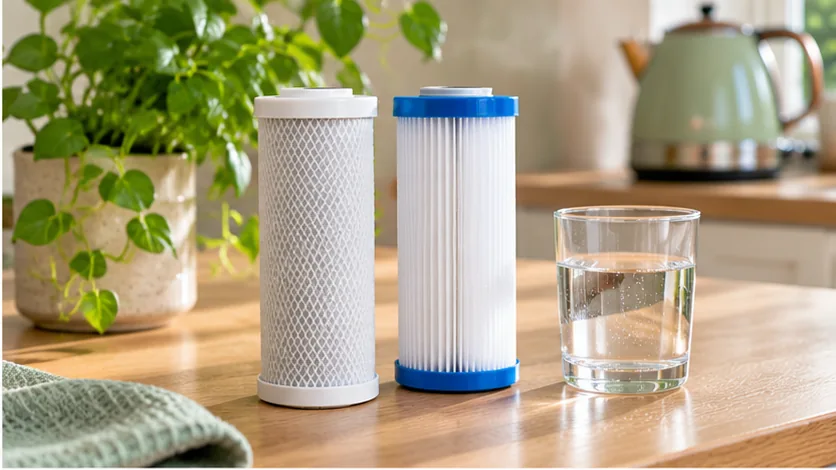
Consumables are often not interchangeable between model families. A lower purchase price can be outweighed by recurring filters or a more complex installation. Consider cartridge prices, filter intervals and the cost of water discarded by the RO process.
Waterdrop examples from the UK product listings
| Model | Advertised cartridge schedule | Illustrative annualised filter cost* |
|---|---|---|
| G3P600 | CF ~6 months; CB ~12 months; RO ~24 months | ~£148 |
| M6SL | M6RFL ~12 months | ~£70 |
| M6HG | M6RFG ~12 months | ~£70 |
*Illustration calculated from manufacturer-listed standalone cartridge prices checked 13 November 2026 (G3: £31/£31/£109.99; M6: £70). Annualised values are not annual cash invoices and do not imply that all users replace cartridges at exactly those intervals. Check current price and manual.
Water and electricity
Reverse osmosis sends some input water to a reject stream. For a stated 2:1 pure-to-drain ratio, producing 2 litres of filtered water theoretically requires 1 extra litre for the reject stream. For a 3:1 ratio it is about 1 extra litre per 3 litres filtered. Real usage varies with conditions and flush cycles.
Powered filtration systems also use electricity. Heating filtered water increases consumption; the actual number depends on your use. Our calculator includes the filter and reject-water assumptions but does not invent electricity costs.
Cost-check checklist
- Note what cartridges the initial box includes.
- Check the correct replacement model number before buying.
- Consider installation and service costs, especially under the sink.
- Look for authentic filters and documented maintenance instructions.
- Use our calculator to change the purchase price and local water tariff.
Sources & verification
Facts below are taken from the linked sources; product information may change. Last editorial check: 13 November 2026. No hands-on product testing was performed.